
钢铁侠3
China’s auto exports top 1 million for second straight month in July, NEV shipments surge 145.5% amid strong global demand_我的网站

A |
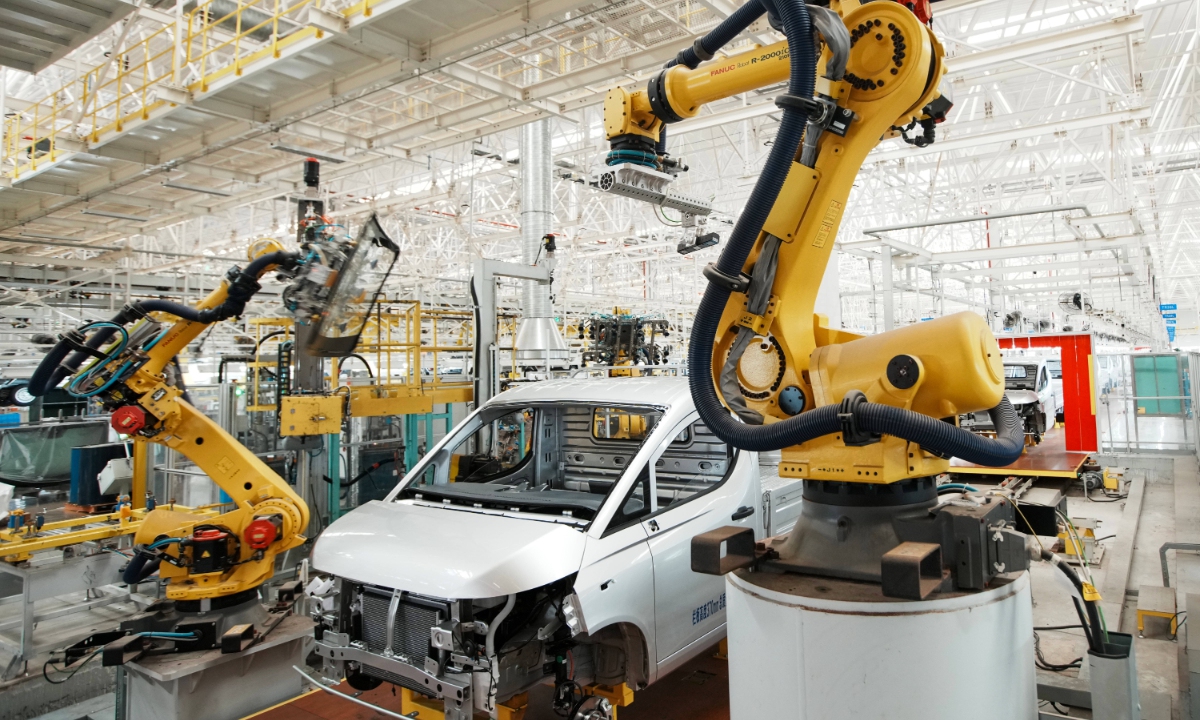
China's auto exports maintained strong growth in July, with shipments exceeding 1 million units for two consecutive months in June and July, according to the China Association of Automobile Manufacturers (CAAM) released on Wednesday, and new-energy vehicle (NEV) exports were particularly strong.
The latest data show that China exported 1.043 million vehicles in July, up 0.6 percent month-on-month and 81.3 percent year-on-year. Auto exports had already exceeded 900,000 units in both April and May, before rising above 1 million units in both June and July.
Notably, NEV exports were particularly upbeat. China exported 553,000 NEVs in July, up 5.7 percent month-on-month and 145.5 percent year-on-year. NEVs have accounted for more than half of China's total auto exports for two consecutive months.
The rapid growth in China's auto exports is mainly attributed to the country's complete automotive industrial chain, the CCTV News reported, citing a representative with the CAAM. From lithium processing and battery manufacturing to electric motors, control systems and vehicle assembly, China has sufficient production capacity, competitive costs and a highly resilient supply chain, said the representative.
The continued growth in NEV exports reflects rising global demand for cost-effective Chinese products and the needs of the global green transition, Cui Dongshu, secretary-general of the China Passenger Car Association, told the Global Times on Wednesday, noting that China's highly coordinated NEV ecosystem enables faster technological and product upgrades while keeping costs under control, giving the industry a key competitive edge.
Among China's top 10 auto exporters, Chery exported 1.141 million vehicles in the first seven months of the year, up 71 percent year-on-year and accounting for 18.6 percent of total exports. Tesla recorded the fastest growth from a year earlier, with exports reaching 295,000 units, up 130 percent, according to the CAAM.
"Despite rising trade barriers in the US and Europe, China's NEV exports continue to grow rapidly, reflecting strong global demand. Trade restrictions may shift export flows, but cannot easily curb demand for competitive products," said Cui.
Meanwhile, Chinese NEV companies are diversifying its markets, with regions such as Southeast Asia playing a growing role.
The domestic market remained the largest market for NEVs. In the first seven months, NEVs accounted for 53.2 percent of domestic auto sales, according to the CAAM.
The booming demand for China-made NEVs at home and abroad also rebuts the "overcapacity" narrative pushed by some Western media and politicians, as facts and figures show that demand is outpacing supply, Cui said.
An official from China's Ministry of Commerce told a press conference on July 28 that China has the world's largest consumer market, providing a testing ground for new technologies, products and services. The country has ranked first globally in NEV sales for 11 consecutive years.
China has built a complete and highly efficient NEV industrial system covering the entire chain, from basic materials and auto parts to complete vehicles and manufacturing equipment, with globally leading supply chain responsiveness, cost control and delivery speed.
"A complete, efficient and innovative automotive ecosystem is the result of long-term market competition and industrial development... It cannot be easily replicated in the short term or weakened by tariffs and trade barriers," Cui said.
The industry veteran said that looking ahead, China's NEV competitiveness will increasingly be measured not just by exports, but by the global presence of its companies, technologies and supply chains, as domestic automakers shift from mainly exporting vehicles to building production, supply chains and service networks overseas.
。 近日,杭州市发布《杭州市城镇老旧小区体检指南(试行)》。省建设厅表示,这是全省首份针对老旧小区的专项体检指南,标志着杭州老旧小区体检进入“先体检、后更新”时代。房子和人一样,也会“上年纪”、也会“生毛病”。结构安不安全、管网老没老化、消防通道畅不畅通……这些问题又该怎么查?根据住建部要求,房龄25年以上的老旧住宅小区须每5年做一次房屋体检,城市更新中也要坚持“先体检后更新、无体检不更新”的原则。

B | 杭州出台的这一《指南》明确,适用于建成20年及以上、设施配套不足、人居环境较差、管理机制薄弱的杭州市行政区域内城镇建成区住宅小区。那么老房子主要体检些什么呢?《指南》划分了“建筑本体、基础设施、环境秩序、长效运维”四大维度,细化出21个一级检查项目、67个二级核查内容,涵盖房屋结构安全、外立面状况、水电管网铺设、电梯运行安全、公共空间配套、物业服务管理等与居民居住安全和生活品质息息相关的项目。具体来看,在建筑本体方面,重点排查建筑结构安全、外墙渗漏与高空坠物隐患、电梯运行安全等核心风险;基础设施方面,聚焦管网老化、消防通道堵塞、飞线充电等突出安全隐患;环境秩序方面,统筹推进绿化景观、公共活动空间、停车配套等方面的整体提质;长效运维方面,覆盖物业管理、维修资金、居民自治、社区共建共治等内容,旨在夯实改造后长效管理基础。值得关注的是,《指南》将危及安全的指标明确列为“风险项”,作为改造优先处置内容,同时将居民改造需求划分为“一般”与“紧急”两类,作为改造项目排序、资金倾斜的重要依据。“为老旧小区建立常态化的体检机制,真实摸清群众需求,这是今后城市更新的必走之路。目前全国层面的老旧小区体检指南尚未发布,杭州实践将为全国性的老旧小区体检指南贡献地方智慧。”浙江省建筑科学设计研究院城市更新首席专家王贵美对这份《指南》表示了肯定。接下来,市建委将持续构建起“全面体检、隐患分级、需求分类、项目生成、改造实施、复查评估”的全链条工作机制,精准区分安全底线风险项与民生提质一般需求,为今后杭州老旧小区改造提供标准化技术支撑;并通过系统化体检精准排查老旧小区现存问题与潜在风险,让改造真正改到群众心坎上,让居民在老小区也过上“新”生活。
Current article:http://i60hl07.diaoengngtengdiachanpiezao.sbs/list_4sd/wuikv4.html
Published on:15:41:33
我的网站最近更新
- 普鲁佐:迪巴拉和马伦能起到决定性作用 国米起跑线上就领先10分
- 徽商银行:上半年实现归母净利润92.03亿元 同比增长1.03%
- Iraq opens new international airport in northern Kirkuk
- 韩江发生2024年第3号洪水 水利部启动洪水防御Ⅳ级应急响应
- China's Smart Dragon-3 rocket launches 2 satellites(1/4)
- 史蒂文斯点评乔治:头脑清晰 能全方位助力球队
- 北江流域将现接近百年一遇洪水 气象专家:多地累计降水量突破4月历史纪录
- 两岸影人在北京共话电影合作
- 起获2700多条漏税香烟 两男涉逃税逾29万元被捕
- 阿富汗临时政府发言人:击毙包括3名指挥官在内的40名“叛乱分子”_潘杰_希尔
- 双色球2026087期开机号分析(附历史)
- 始终以正确政绩观担当作为、履职尽责——树立和践行正确政绩观学习教育取得明显成效
- Ranil as corrupt as any, says JVP
- 北青:乌兹别克斯坦青训结硕果,中国足球从中应该获得启示
- 独家|对话北京人形机器人创新中心CTO唐剑:世界模型有望带来具身智能的“DeepSeek时刻”
- 2026香港小姐12强公布:网友围观 你觉得哪位能夺冠
- Steam 喜加一:原价 49 元 RPG 游戏《Dokimon Quest》免费领
- 巴彦淖尔福彩市场管理员职业素养专题培训圆满举行
- 英伟达详解 Vera CPU:专为智能体 AI 构建,88 个Olympus 核心
- 现代汽车全球COO称将与使用童工的美国供应商“断绝关系”
- 대법, '서부지법 폭동' 가담자 5명에 11억 7000만 원 손배소
- पहलगाम की बैसरन घाटी पर आतंकियों ने क्यों किया था हमला? NIA ने कर दिया एक्सपोज
- 洽洽食品:上半年净利润2.46亿元,同比增长177.38%
- 上市公司并购重组涌现新亮点 硬科技领域重组交易热度不减
我的网站热门资讯
- 홈런 기쁨 나누는 카스트로
- 被中国移动恶意扣费客服推卸责任
- 注意防暑降温!今明两天济南最高气温达34℃
- 攀岩亚青杯,中国攀石比赛夺2金,13岁王沐易首冠创历史
- 创历史新高!我国44名专家获“IEC 1906奖”
- 韦东奕主编练习册,迫于压力下架?
- 全线升级!同一目标!九路诸侯!30年来东部迎最残酷一季
- New 10-year plan to end domestic violence in Australia
- 수유동 오피스텔서 지인 살해한 50대 구속 기소
- 研究团队调查发现超七成英语生物医学论文已使用 AI 辅助写作,呼吁业界建立完善监管机制
- 女子癌症晚期成了网红 她写下了100个人生遗愿清单
- 弗拉格:欧文是史上最伟大之一 合练收获良多
- 国产游戏赚翻海外!网易收入12亿霸榜第一,腾讯天美第八名
- 腾势双门跑车谍照曝光 保留腾势Z概念车设计?
- Dutch crown princess leaves after threats
- 探索“文旅+”的无限可能
- 最高时速160公里,京冀首条跨省域地铁、北京地铁22号线空载试运行:从河北三河市燕郊镇到北京城市副中心最快约9分钟
- 贵州贵阳新增51个高风险区 21个中风险区_防控_疫情
- 物理销毁翻车!网友买到打孔SSD:不仅没坏 还能重装系统
- 国台办:民进党当局所作所为是影响大陆学生赴台就读的根本障碍
- 在富力宏和亮星蓝色伴侣20 Pro发布后,华为为女性打造了一款“温度”手机。
- 遗憾告别世界女排联赛,中国女排未来的路还长!
- 邓亚萍点评雨果夺冠:雨果打得尤为出色,小将林诗栋也是尽力了
- 悠哉悠哉!巴特勒赛前INS:喝着咖啡&看着绿军vs魔术G1直播